2005年08月06日
下北沢X物語(「広島原爆忌」特別号)〜HIROSHIMA TRAMS ANTHOLOGY〜

電鉄の男は幾たりも出征していった
最重要軍事拠点都市の強固な鉄路は
銀に輝いていねばならないのに
磨き手を欠いた広島の路面線路は
赤錆が滲みはじめた
きらめきを与えたのは十四歳の少女たち
ふくらみ始めた乳房にあしたを躍らせ
広島近隣の郡部から瀬戸内の島々から
はるか山向こうの里 島根から
トランク一つ抱えてやってきた
学舎の名は「広島電鉄家政女学校」
比治山の南麓皆実町二丁目の
薄紅の校門をあどけない少女が
笑みを浮かべて潜って行った
昭和の十八年 本科一期生は七十二名
朝には寝足りない顔に皺寄せてお勉強
方程式を解き 白文に返り点も打った
昼には揃いの白い布きれを頭に巻いた
電鉄のマーク入りの鉢巻は皇国少女の命
りりしくてあることが銃後の娘の心がけ
頭骨をきりきりに絞り上げた紺の隊列が
皆実町から千田町の車庫まで駆け抜ける
京橋川にかかった夏色の御幸橋を渡る頃
乱れた後尾に組長の声
「御幸のみは、お国のおじゃ」
経痛の子は腹部から手を離した
やせ細ったどんじりは歯を食いしばる
「切符をお持ちでない方いらっしゃいませんか」
カチンカチカチ カチンカチカチ
ハサミの音はちょっと誇らしげ
乗客をかき分けかき分けパンチが通る
ときにはブラウスのふくらみに
硬い手が伸びてきて少女は顔を朱くする
カッチンカチカチ カッチンカチカチ
非国民には音高くして戒めるのみ
それでも悪戯坊主には果敢に制裁
電車の防護ネットに中学生徒
やつらには窓からげんこ一発
何から何まで少女車掌は忙しい
鳥居通過の案内も大事なしごと
「護国神社でございます。ご礼拝ねがいます」
皇国少女は一段と声高くはりあげ そっと一礼
学寮二階の防空監視哨は息つくところ
炒り豆やはったい粉を分け合いながら
それぞれが思いつくままに乗務報告
「痴漢のおる電車にはもう乗りとうない」
「紙屋町のカーブでポールが外れたんよ」
「うち、恋文………もろうたんじゃから」
「ほぃで、どうしたん?」
少女達の声が一時に合わさった
「運転士が見咎めて破り捨てたんじゃけえ」
「うちらの恋は、こいはこいでも終点じゃ」
にわかにしんみり赤や青のちゃんちゃんこ
見渡すと安芸の都にこぼれ灯点々
「下着も靴も盗まれるわ、はったい粉ものうなるわ」
月影にかすかに見えるは港に浮かぶ安芸小富士
「うち、はよう帰りたい」
その一言に向くはてんでん泪の里
神風は昭和の二十にも吹かず
女学校には鉢巻が増えゆくばかり
十四歳から十六歳まで
本科専攻科合わせて総勢三百余名
方程式や漢文に居眠りしたのはもう昔
日ごとに警報サイレンつのる中
朝から晩まで切符の売りさばき
パンチばかりかハンドルまでも
コントローラーの扱いもよく分からないまま
古参運転士の言う通り見よう見まねの機械操縦
それでも己斐へ 宇品へ 江波へ 駅前へと
四ノッチの低速運転で娘たちが市内を駆け巡る
白神社を過ぎて袋町の大楠木にかかるころ
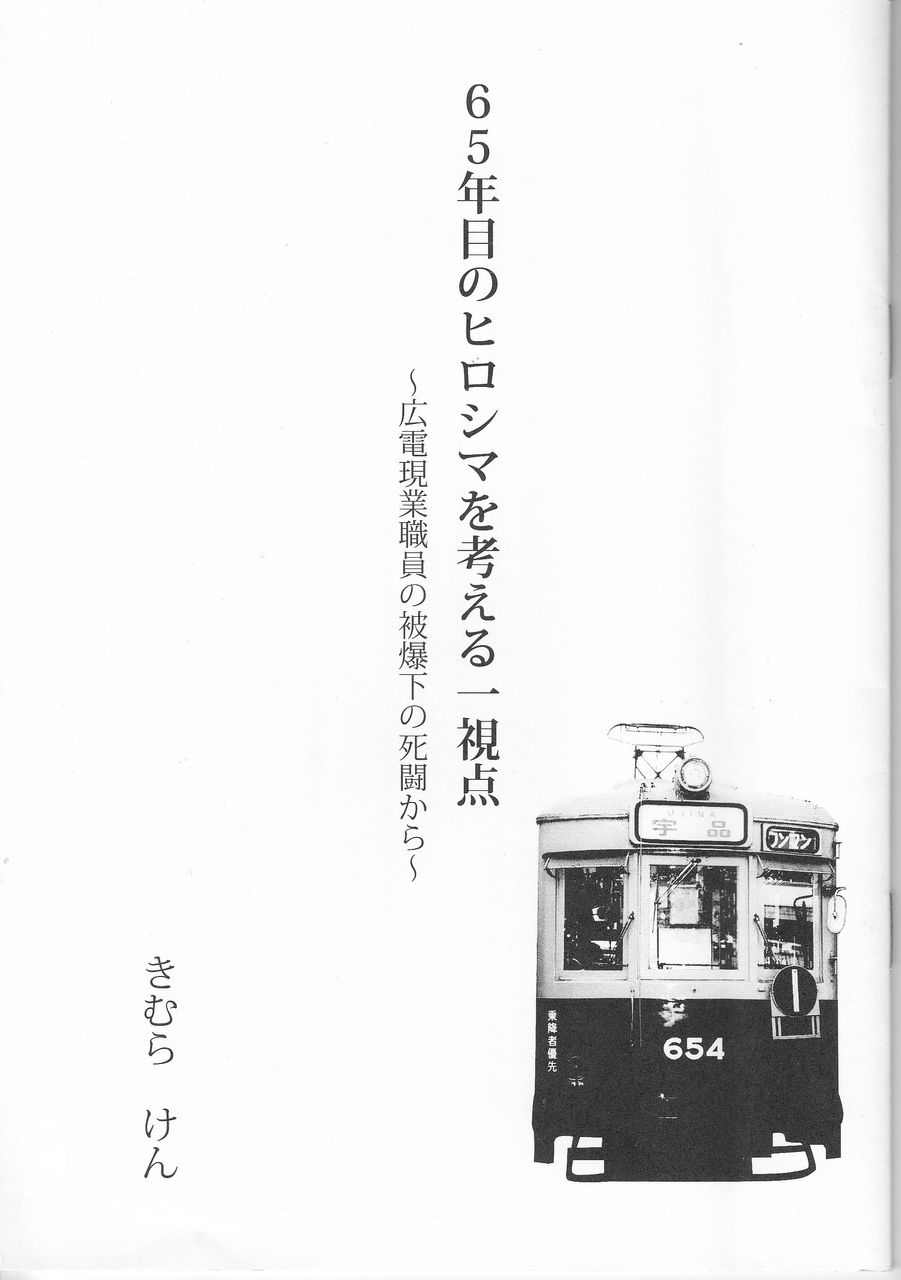
向こうに見えたのはボギー台車の六五○形
右足が自然にフットゴングに
対向新型は接近するも運転台に人影もなし
こちらの百形単車の白鉢巻は首を傾けた
そのときに車番六五四が突然に「ジィリン」と放つ
向こうのコントローラーの陰におかっぱ頭がちろり
こちらの運転士は慌ててゴングを強く蹴る
大正元年生まれの百形のベル高らかに
こんにちわ さようなら
鐘に託した挨拶に若い命が響き合う
「うちも生きとる」と 思う一瞬
ひもじさも 怖さも 憎しみも 疲れも飛んで
警鐘の余韻は革屋町から広島駅前まで
大日本帝国の年歴は昭和の二十年
敵国の年歴では千九百の四十五年
いずれも八月六日のこと
不気味に響く空襲警報も明け方には止んで
紅い夾竹桃に朝日が射した
朝のラッシュは鉄路のにぎわい
路面電車は車庫を出払って
駅前へ 江波へ 宇品へ 横川へ
切符の立売娘は紙屋町や広島駅前へ
遅番は皆実町の学寮で朝寝坊
さりげない日常がさりげなく
娘の穏和な顔に時を刻みゆく
そんないつものいつもは
一瞬にして宙空の果てに
日本標準時の八時十五分
ピシュリ 赤青の閃光が全天に光る
ドグワン 爆裂の音響が地軸を裂く
ピシュリは地上の砂を燃やし鉄を溶かし命を焼いた
ドグワンは地表の命と物とをことごとくに粉砕した
炎熱火球がたちまちに人を街をぐわぼりとひと呑み
市街の中心 相生橋近くに
たった一機の飛行機が平然と悠然と
途方もない悪意のエネルギーを投擲した
ピシュリ ドグワンのその刹那
幾万もの人々の希求がうち砕かれた
近辺の元安川 本川の土手筋一帯
建物疎開に動員された学徒は数知れず
無念累々 内蔵赤赤 肉塊黒黒 瓦礫延々
遠く見晴るかす安芸小富士まで
茫漠と広がるのは宇宙人類の屠殺場
各々の死装束は焼焦げの一枚の皮膚
天を恨むか 敵を恨むか
真黒い男根が空を指さす
あんぐり開けた口には叫びの跡
せまり来る火炎に覚悟を決めて
「君が代」の「よ」まで歌った男の子
ゴム紐一本の下着をまとった隣の娘は
「さざれ石の」の「さ」まで生きていた
いずれも目玉をこぉろんと飛び出させ
むくもくと天高く上がる煙をねめつける
人間ばかりか橋の上には電車も横たわる
ぐしゃりへしゃりと骨組だけの元年電車
吊革に下がったままの灰炭は並んだ乗客
車掌カバンをしっかり握った女は黒鉢巻
彼女の小さな口に白い歯が
朝餉に小鰯を噛んだ十四歳
電鉄女学生たちの避難場所は
広島郊外鈴峯の実践女学校
彼女らが生きてあるのは偶々
木炭バスの出発が少しはやかったなら
電車が福屋百貨店の陰でなかったなら
そんなもしももしもの命が肩寄せ合う
安否確認をと教師が名簿を読み上げる
沈黙の返事にあの子この子が思われる
生き残った生徒は二日目からは救援隊
とはいえ皆は着の身着のままはだし足
煮えたアスファルトで皮膚は水ぶくれ
「生き地獄にはもう行きとうない」
思う想いは同じでも仲間は捨てられぬ
蛆の湧く死体に躓きぬるりと骨を踏み
声を口に呑んでは屍の街をさまよい歩く
救護所でやっとありついたおにぎりに
生きてある臓器がかぶりつく
糸を引いたそれが命の味わい
捜索の勇気も湧いて線路みち
横たわる電車やバスを覗いて行くと
黒焼けや赤い石榴の亡骸つぎつぎに
広電のバスはにわか仕立ての霊柩車
発車オーライの声だけはほがらかに
避難所に着いた僚友がなんとも軽い
艶やかな黒髪は跡もなくちんちりに
理科室に運んでかたちだけのご焼香
やっと生きながらえておるいのちも
にわかに元気になって唄を歌い出す
そんな明くる日には決まって野辺送
裏山で青い桃の実盗んで亡骸を焼く
涙は涸れはてて囓る果肉がほろ苦い
それでも火のともる骸はまだしも
紙屋町の切符売は影さえ見つからず
哀しみは碧い夏空に染みこむばかり
ピシュリドグワンから三日後
不意に鳴ったのは電車の警鐘
六日夕刻から始まった夜通しの復旧作業
残った広電職員と駆けつけた東京電信隊
焼け跡から電線を一本一本掘り起こし
立てた船の帆柱にそれを巡らし巡らせ
己斐と西天満町とのあいだが単線開通
一番電車は一枚のガラスもない四百形
女車掌は家政女学校本科二年生
吐き気と下痢をこらえて声上げる
「この電車は折り返しの己斐行きとなります」
人は耳を澄ますが異物はざわぞわと
つり革や天井にはびっしりと銀バエ
幾万の骸に湧いたそれは不吉な徴
中島町の母や僚友にもたかったか
十五歳の少女は思い余って紐を引く
チィン チィン チィン チィン
広島にチンチン電車の鐘が鳴る
焼けた皮膚を体中からぶら下げた男
赤ん坊を逆さに負ぶった若い母
顔の半分を焼かれた男の子
追憶に沈んだ音が誰もの胸に響き渡る
絶望の街に今は人も電車も生きてある
グワッタンガァウゴゥ
グワットンガァウゴゥ
電車は命をつぶやいて走りゆく
行く手には線路がきゅろんと銀に
己斐の山並へと希望はまっ直ぐ
八月の十五日に終戦を告げる突然の詔
講堂では女学生が自決 自決と騒ぎ立てる
そう言いはしたものの今はの際にある友の
目の前で刃を立てることなどできようか
戦いの始まりは恐ろしく終わりはふっつり
家に帰る友がいて乗務を続ける者もいる
時は過ぎゆき 九月には大風が襲って
水を水をと求めた人々に時違の雨
焼け跡はどこもかしこも水びたし
鉄路がまた錆びてゆくあいだにも
銃前から男たちが幾たりも生還し
銃後の女学生はひっそりと帰郷する
赤い火傷は繃帯でかくし
白い鉢巻は風呂敷に包み
山の里 海の里へと散り散りに
月末には校長がとうとう解散宣言
残った生徒は誰言うともなく集って
愛唱の「椰子の実」を車座になって歌い出す
友の分までとあらん限りの声を振り絞る
たちまちに殉死した三十人の顔がつぎつぎに
僅かな骨に変わり果てた友黒い影だけが石畳に残った友
一人二人と泣き崩れてはまた起きあがって歌を続ける
「いずれの日にか国に帰らん」が最後の節回し
娘の血潮が声となって涙に弾けて終わった
合唱の終わりが学校の解散
車座が解けて、交わす挨拶は本当のさようなら
創設二年半で暦からも消え果てた
その名は 「広島電鉄家政女学校」 (2000年8月)
HIROSHIMA TRAMS ANTHOLOGY
By Ken Kimura
During the "Great East Asian War”,
the railway men were sent to the front.
Although the iron lines had to glitter like silver,
in the most important military town,
rust had eaten away the street lines,
with no one to polish them.
The 14 year-old girls gave them new light.
They arrived with future in their newborn breasts
from local towns around Hiroshima, from islands of the Setouchi sea,
over mountains, far away villages, from the Shimane prefecture,
carrying only one little suitcase with them.
The name of the school is “Hiroshima railway company girls’ school of domestic science.”
At the second quarter of Minami street at the bottom of Hiji hill,
cherubic girls with shy smiles
entered the school gate painted in pale red.
In the 1st Showa year, 72 students were in a classroom.
With sleepy eyes, drowsy looks, holding pencils,
solving equations, reading Chinese poetry
with matching white bands tied around their heads.
The railway headband is the symbol of life for patriotic girls.
Gallant is how they should be, responsible for the inland people
Girls in navy uniforms lined up with tight headbands
are marching from Minami street to the garage at Senda street.
On the Miyuki bridge over the Kyobashi river painted in summer colours,
the head teacher shouts from the back of the line,
“Mi” of “Miyuki” has the same symbol of the word country
A girl suffering from period pain releases her hand from her belly,
A skinny student at the end of the line clenches her teeth
“Fares and passes please”
click clack click clack…
The sound of the punch is the sound of pride
Punching tickets through overflowing passengers,
girls may blush on the touch of a man's hand,
which reaches their breasts underneath their shirts
Click clack click clack
Telling someone off, he's not patriotic,
moral sanctions to mischievous boys
Hitting a window with a clenched fist
to students on an animal removal net.
Girl conductors are very busy from one to ten.
They make an announcement going past the gate of a shrine,
“Here we are at the Gokoku shrine. Worship please”
Throne girls speak up and salute quietly.
At the top of the dormitory is where they can breathe.
Sharing roasted beans and pieces of bread,
they chat and talk about the day on the train.
“I don’t want to work on the train with the gropers”
“The electric pole came off at the curve of Kamiya-cho stop…”
“I…got… a love letter…”
“What did you do with it?”
Girls’ voices crossover.
“The driver told me off and ripped it to pieces.”
“The final stop Koi is called Love”
Depressed girls in red and blue vests
look over Aki town and its dim little lights.
“My underwear was robbed, my shoes, no more bread…”
Aki-the-small-mt.-Fuji floats distantly in the port under the moon.
“I want to go back home…”
Eyes in tears are listening to her words.
The Kamikaze wind hasn't blown in the 20th Showa year.
More and more headbands in school.
From the age of 14 to 16,
three hundred students of main and non-degree courses.
The drowsy eyes at equations and Chinese lyrics are no longer there.
warning sirens thunder louder and louder each day,
and more punches and more tickets to be sold.
Soon punches will be replaced by steering wheels.
Not knowing how to control,
Learning to drive by watching the other drivers.
To Koi, to Ujina, to Eba, to the railway station,
Four-notch slow trains run all through the city.
“Meet and depart.” Trains pass each other on parallel tracks.
Passing Shirakami shrine and the bottom of Big Camphor tree.
One day the 650 train is coming from the other end.
A girl driver salutes the other train stepping on the gong,
but she sees no one on the driving seat.
She wonders why leaning her head a little,
Suddenly she hears the sound of the foot gong.
And she spots the tip of a girl’s head above the controller,
She salutes back hastily.
The 100 train made in 1910 rings its bell,
Hello, Good bye.
The salute of the bell echoes with their young lives.
This is the moment to feel "alive"
No hunger, no fear, no hatred, no exhaustion.
The sound of the bell reverberates to the final stop.
The 20th showa year of the imperial country
is the 45th year of the 20th century in the enemy’s calendar.
It was the 6th of August.
The horrible sound of the red alert freezed the dawn,
And the sun rose over an oleander tree.
Rush hour, crowded trams,
All trams on duty,
To the railway station, to Eba, Ujina or Yokogawa,
Ticket selling girls to Kamiya-cho and the railway station.
Students of late shifts are oversleeping in the dormitory.
Ordinary life awakens to an ordinary day.
Gentle smiles on girls' faces carve the time.
Those ordinary moments suddenly became
The end of the world.
8:15 at Japanese standard time,
A blue red flash cuts the air,
And a big bang breaks the ground,
The flash burns the earth, melts the irons and scorches the bodies.
The big bang crushes the lives and materials into pieces
A fireball swallows the whole city and the people.
In the centre of the city, near the Aioi bridge,
One little plane dropped a gigantic vicious energy,
Calmly and impassively.
At the tiny moment of the flash and the big bang,
Hundreds and thousands of dreams were shattered.
On the Motoyasu river, on both banks of the Hon river,
Students who were working were now floating
White mortification, red organs, black flesh, gray rubbles,
Aki-the-small-mt.Fuji could be seen
Over the deserted slaughterhouse of the spacemen,
Shroud was the thin burnt skin,
Grudge against the destiny, grudge against the enemy?
Black burnt phallus pointed out to the sky.
A mouth half opened to start to scream
Resigned by the approaching blaze,
A boy was singing the national anthem,
The girl next to him wearing a rubber band
survived to sing the next word
with both eyeballs popped out,
staring at the smoke climbing high up.
There were trains lying on the bridge, not only human beings.
The Taisho tram survived as a metal framework.
Carbonated objects were the passengers still holding a strap
A black girl holding a conductor bag had a black headband.
Inside her mouth, white tiny teeth were seen
With a little fishbone which she had eaten that morning.
The refuge for girls was the
Jissen girls’ school in Suzugamine
Girls who happened to be alive got together.
What if the carbonated bus had departed a little earlier?
What if the train had not been in the shadow of department store?
The lives born from those IF’s gathered together.
A teacher reads the roll-call to check the girls' safety.
Several absences bring memories of girls' faces.
The survivors search for their friends on the second day,
Without enough clothes to wear, with bare feet.
Too hot to walk on tarmac roads, burning their skin.
“I don’t want to go to this living hell again!”
everybody feels alike, yet their worries propel them into searching.
Stumbling against a corpse with maggots, stepping over slippery bones,
They wander around the city with no words to say.
They eagerly bit into riceballs at a first-aid station
Their living organs’ temptation is satisfied
With the half rotten food.
They head up for another search on the tram tracks.
Looking inside of what's left of trains and buses
To find the black burnt subsistence and the red pomegranate corpse.
The Hiroden bus suddenly turns into a funeral car,
Only with the gentle voice of “all aboard!”
Coming back to the refuge with very light friends,
Black glossy hair turns into tight perm.
Funerals are just formalities in the science room.
The weak survivors suddenly start to sing
Cheerfully and endlessly.
But it is the sign of death.
Other girls have to burn their friends while eating stolen peach.
No more tears to shed, the peach tastes bitter.
Those to be burnt are ironically lucky,
The others were not even found.
Girls' sorrow soaks into the blue summer sky.
Three days after the flash and the big bang,
The unexpected sound of a bell reverberates.
Continuous effort to restore the tram system started on the 6th evening
All through the night by the Hiroden staff and the military wires section.
Digging each wire from the burnt ground,
Stretching the tiny bits of wires onto sail masts,
Finally the tracks are restored between Koi and Nishi-temma.
The first tram without glasses is the 400.
A girl conductor is a second year student.
Trying to say from the top of her voice, enduring a diarrhea and feeling sick.
“This tram is bound to Koi!”
passengers carefully listen to her, then something noisy distracts them.
There are flies on the ceiling and traps.
Those ill omen are born from thousands of fallen bodies.
Were they on my mother’s body or my friends’…?
The fifteen year-old girl is horrified by her idea.
She burst into pulling the bell string, ding-ding-ding-ding!
The sound of ding-ding-train echoes in Hiroshima.
A man hanging his burnt skin out of his body,
A young mother carrying her baby upside down,
A boy with half of his face burnt,
The sound of the bell echoes in the hearts of those lost people.
The train is still alive, the people are still alive in the despaired city.
Guattan, gwaa, go-go
Guatton, gwaa, go-go
A train runs carrying the sound of people’s lives
The railway simmering silver beyond.
There is hope beyond the railway.
Sudden announcement of surrender on the 15th of August.
Self-determination, that’s what girls try to have.
However, who will take care of their dying friends,
How can they kill themselves in front of someone who’s already condemned,
The start of the war was horrible, and the end of the war comes without notice.
Some girls have left for home, some stay to help trams move.
The time has passed, a storm hits Hiroshima in September.
The wrong time for the people who died for water,
Flood everywhere in the burnt city.
The silver railway starts to rust,
Men come back from the front one by one.
Girls are not needed, leaving the school silently.
Hiding red burnt skin with white dresses,
Packing their headbands in their suitcases,
Leaving one by one to the hometown in the mountain, to the hometown near the sea,
The principal declares closing down at the end of the month.
The school which burnt down on the sixth of August,
Has disappeared from history, two and a half years after its foundation.
The name of the school is “Hiroshima Railway Company Girls School Of Domestic Science.”
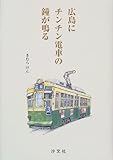
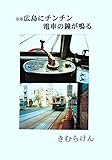
八月六日「原爆忌」、その記憶は後世に伝えるべきものである。わたしは「広島にチンチン電車の鐘が鳴る」という物語を1999年暮れに書いて出版した。その翌年、2000年の夏に広島電鉄家政女学校の皆さんが広島の神田山荘にお集まりになった。そのときにお会いした家政女学校の皆さんにお渡ししたのがこの長編詩である。彼女たちの記憶を忘れないためである。物語の取材で書き漏らしたところなどを加えて長編詩にした。この詩は、「皇国少女」というドキュメンタリー番組のテロップに入れられて一部が公表されたものである。オランダで放映されたたとのこと。なお、英訳は「皇国少女」、(日本側中心スタッフ、常井美幸氏)の制作スタッフが試みたものである。朗読には不向きかもしれないが、往事の記憶を伝えるために原詩の朗読の機会があれば読んでほしい。そう期待するものである。なおその場合にはつぎのメール宛先に連絡をしてほしい。aoisigunal@hotmail.com